Alright – I will ‘fess up. I am a format junkie. What does this mean? I have come to the realization that my music obsession includes a powerful component – I get a kick out of listening to music from different technological formats. I am somewhat bummed that the reel-to-reel deck I’ve had since the early ebay days has bitten the dust. Reel to reel tape decks may well be THE single most inconvenient music playback device ever, but cracking open a “new-old-stock” sealed reel tape and loading it up to watch the reels turn away with great music pouring out just gives me the (good) heebie jeebies! Yes I own and enjoy 8 tracks too (especially if they’re QUADRAPHONIC – muuuwhaaahahaaa!!). Anyone out there who loves the first Steely Dan album (Can’t Buy a Thrill) as much as I do and has never heard it in beautiful quadraphonic surround sound – you just don’t know what you’re missing. I get goose-bumps. I get misty-eyed. I shed tears. I’m pathetic, I know!!
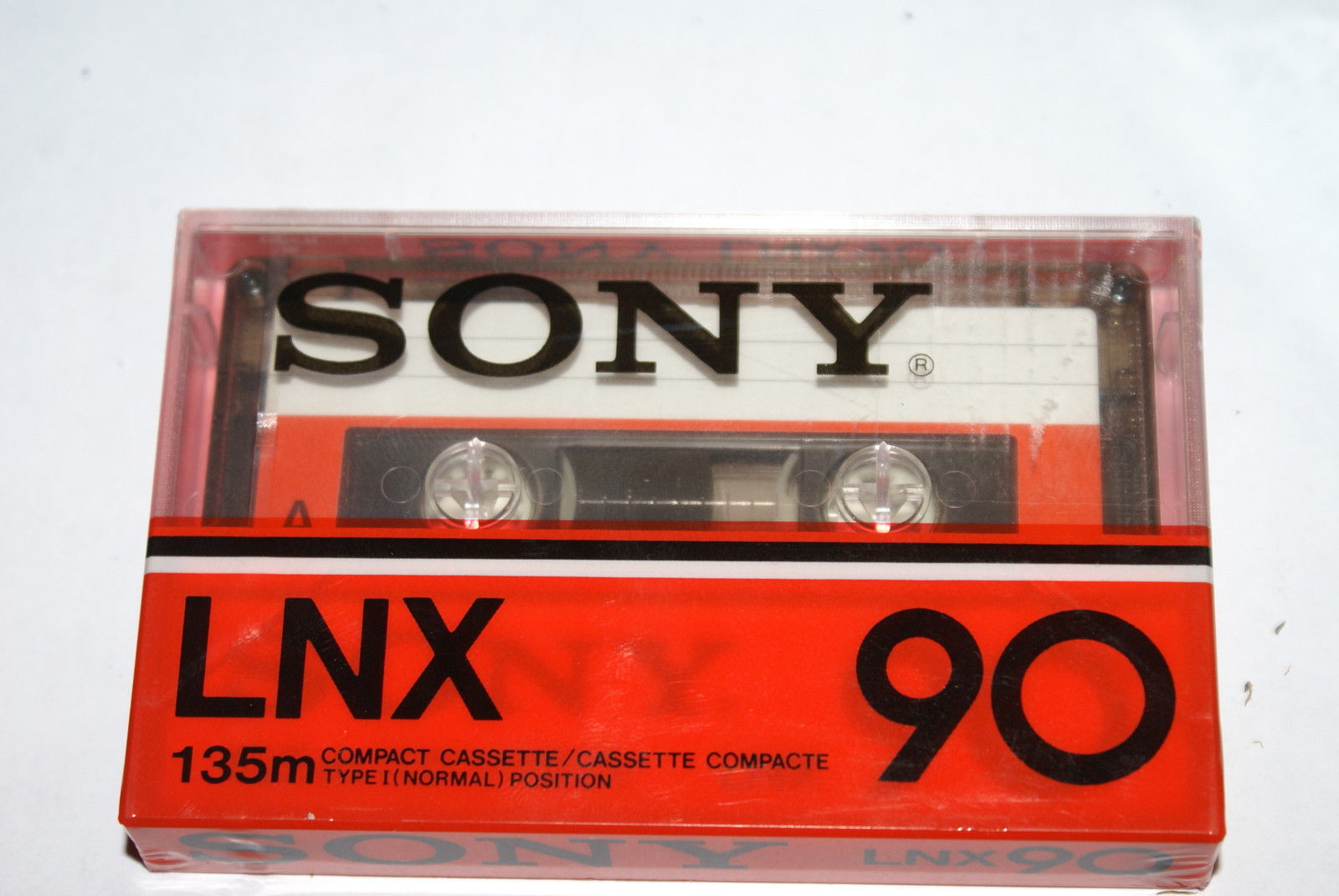
Just today I stumbled upon a bunch of “new-old-stock” blank cassettes (still sealed!) in a thrift store. Anyone remember when these suckers were new on the shelves?
Try “early 1980s”, dude. This particular brand of tape has a special significance for me. When I was a young lad in the early 80s, my older cousin Jimmy made a mixed tape of songs he had been listening to and sent it to me in the mail. The blank tape he used was exactly like the one pictured above. It blew my mind to find a bunch of these still sealed so I had to buy a few. My cousins, whom I looked up to as if they were my older siblings (I had none, biologically), were my idols. The idea that my cousin took the time to put together a bunch of songs from his collection he thought I would enjoy was really amazing to me. Without dragging that tape out of storage I seem to recall what prompted the whole thing was me hearing The Yardbirds’ song “Lost Woman” at their house when I was visiting (for a holiday most likely – they lived in New York City and my family had moved to the ‘burbs). What I particularly loved about that track was – the bass line. It still strikes me as one of the coolest bass lines ever! What do you think?
Anyway – that particular track was only available on an import LP at that time. I just didn’t want to live without that song and it would actually be a few years before I got my mitts on a genuine LP copy. What a great album cover – I love it!
To fill up the rest of the tape, my cousin put on some Queen songs, some Jethro Tull stuff - all tracks I had never heard before and weren't on the radio (deep cuts). I was really into that tape! It started a dialog that continues to the present times – with my cousin and many friends. For many years I really got into making tapes for friends (and they for me – all of which I still have). And I got pretty good at creating “moods” with music on a 60 or 90 minute tape – sometimes with music from quite different genres. Now that cassette has given way to digital files, I kinda miss unwrapping a new blank tape and trolling through my record collection to piece together a collection of some favorites du jour to pass onto my pals.
So a few weeks ago, I did something I haven’t done in a long time – I dragged out my funky old cassette deck, cracked open a C-90 and set about making a mix tape of tunes that grabbed my fancy as I went along. Originally I wanted a 60 minute tape – 30 minutes per side. 90 minutes can be a long time to fill. 60 minutes is more of a challenge to put together a bunch of tunes that somehow hang together – maybe creating or reflecting a particular mood. I sure made some legendary tapes in the past. But that’s where cassette tapes have been relegated to – the past.
But in the not-so-distant past the cassette tape was the preferred format for music lovers on the go. Long before the ipod there was the Walkman and the boom-box. See this thing, kids? THIS was your 80s status symbol. No X-Box, no Playstation. This was it, dude
The cassette was a pretty durable, if not exactly hi-fi, format. Sure, tapes could get eaten once in awhile, but considering how easy it was to make a copy of even a pre-recorded cassette – you could easily make a near-perfect copy of the original and store that away if you were inclined to take care of your stuff. And consumer tape decks were considered a bit of a threat to the music industry, or so it seemed at the time. Remember these funny little “public service announcements” on the inner sleeves of LP records like this?
(Many years later I was utterly shocked when the technology of CD-burning became available. Why on earth was this allowed? I, for one, saw the handwriting on the wall – perfect digital copies you can make yourself.? Whoah boy! Game changer for sure!)
Even though the sound quality was never stellar on cassette, things did improve over time. I have a really early pre-recorded, massed produced cassette of the Procol Harum “Home” album that is just dreadful. It looks to me like an original 1970 issue and the signal to noise ratio is pitiful – there’s just not enough signal coming off that thing to make it worth the bother of listening to! But by the late 70s and early 80s problems of that sort were resolved enough to make the cassette the logical replacement to the just as portable, yet infinitely more problematic 8-track tape (ever try to repair one of those suckers?).
The best place for cassettes was THE CAR. Since I did a fair amount of travelling as a young man I made tons of tapes for car rides. Many of them are still in boxes in my attic (some have unique music on them…..ah….I suppose I will eventually attract the attention of the “Hoarders” show…….such is life….). The radio – then as now – could not always be counted on to suit one’s mood. Nowadays there’s all these satellite radio channels playing deep cuts, but they’re all segregated into different genres – some of which don’t make ANY sense. Like, what is this Northern Soul shit? Talk about the biggest record collector scam ever. Of all the Northern Soul stuff I’ve bothered to listen to I have to say only about .5% of it was worth a second glance. The vast majority of what collectors are paying mondo bucks for is, musically speaking……shite. Sorry – it’s true. Anyway, I like to hear all kinds of music sometimes totally thrown together in unusual combinations. I don’t have a satellite radio, but I have heard it before and it can be cool, Northern Soul notwithstanding.
So what craziness wound up on my little C90? Hmmmm….
Side A:
The Core – Eric Clapton
She’s Long and She’s Lean – Mallard
Take it or Leave It – Rolling Stones
Blue Form – MU
Powaii – Sonny Rollins (live in Japan)
Babylon Sisters – Steely Dan
Lonesome – Big Bill Broonzy & Washboard Sam
Side B:
TVC-15 – David Bowie
Rock and Roll Stew – Traffic
Carney and Beggard Place - Rahsaan Roland Kirk
It’s Your Thing – Isley Brothers
Killing an Arab – The Cure
Slip Kid – The Who
Reno Nevada – Fairport Convention
The Dolphins – Fred Neil
One More Chance – Sandy Denny
As Strong As Sampson – Procol Harum
Doesn’t seem like a lot of songs, does it? Yeah, I know – your ipod as GAZILLION songs on it. Everything from Celine Dion to the Butthole Surfers. Okay. I have a little MP3 player too and when I want to hear a shuffle with Three Dog Night, The Flaming Lips, Tiny Tim, Fela Kuti and Louis Armstrong in rapid succession I know where to go. But what about a purposeful juxtaposition of tracks from just as far-flung corners of the musical spheres that hang together in such a way that feels like you’re hearing them for the first time – or, at least, from a different point of view?
Alright – if you’ve never heard The Dolpins by Fred Neil – check it out:
What happens when you hear The Clash right after Aldo Nova? Does it make you want to hear Charles Mingus? Or Maurice Ravel? Or maybe Maurice Gibb? Or Rolf Harris? Or Keith Relf? Where does your musical mind travel to? When was the last time you put together a mix tape of songs you love in a particular order for one of the people you cared most about in your life? What would those musical vibrations say?
As Lou Reed once said, “those were different times……..”
It’s been said “there’s a first time for everything” and this morning marked a “first” for me. Today was the first time I ever started my day by listening to the music of Edgard Varèse . More specifically: side one of the infamous Complete Works of Edgard Varèse EMS 401 – the very same LP that propelled Frank Zappa headfirst into a life as a composer of challenging music.
Varèse is not exactly what I would call “morning music”. But I wanted to hear this record again since I installed a conical stylus on my trusty SONY turntable (conical-shaped needles are more forgiving with old mono records like EMS 401). Anyone familiar with Zappa’s orchestral works will immediately hear familiar noises when spinning a Varèse composition for the first time. Led Zeppelin borrowed from Willie Dixon; Zappa borrowed from Varèse.
Yet, if dissonant orchestral workouts were all we heard from Frank Zappa it is unlikely that either his or Varèse’s music would have become as widely known as they are today. There is only one musician I know of who credited the influence of Varèse in his music before The Mothers of Invention’s “Freak Out” appeared – Rahsaan Roland Kirk. Kirk put out a record in 1965 called “Rip, Rig and Panic” (“Freak Out” was released in the summer of 1966).
In the liner notes, Kirk identified the works of Varèse as an influence on his decision to use electronic sounds to enhance what was essentially a “jazz” record. Rahsaan was every bit the musical maverick that Zappa was and took as much pleasure in busting down barriers between different genres. There was at least one time these two giants of the 20th Century shared a stage together - Boston 1969:
Now I would be mighty shocked if there isn’t an audio tape (at least) of this encounter somewhere – in the Zappa vault maybe? The mind’s ear boggles!
Of the two men, Zappa would enjoy more commercial success. Kirk would suffer a series of strokes hastening his demise at the far too young age of 42 in 1977. A terrible loss to the music world. Kirk would have been a welcome antidote to the more conservative “mainstream jazz” that has followed in the wake of his death. But as we all know, if jazz was ever a popular music it certainly hasn’t been in the last 30 or so years. Therefore, the work of anyone in jazz today who might be inclined to stretch the boundaries of music in general would not manage to find a wider audience because there just isn’t such an audience anymore. (Could this have been part of the subtext of Zappa’s “Yo Cats”?)
The idea of melding the so-called classical (composed?) tradition with the jazz (improvised?) tradition had been lurking in the background ever since, well, probably Scott Joplin or Jelly Roll Morton’s time at least. Efforts that leaned towards more “serious” concert-hall fare eventually got tagged with the label “Third Stream”. Lots of folks went swimming in the “third stream” – Duke Ellington, Charles Mingus, Gunther Schuller, The MJQ – even Ornette Coleman. Frank Zappa’s brilliant contribution to this tradition came out as “The Grand Wazoo”: through-composed music for a swinging jazz big-band.
Yet even if Zappa had limited his output to modern classical and third-stream music a-la The Grand Wazoo, we’d still be left with limited impact on the larger picture of the music listening public. It’s hard to consider, but there was a time before “Yellow Snow” in Zappa’s life. What was he doing before the goofy novelty song propelled his popularity to new heights in 1974? Playing rock guitar and sharpening his media-savvy marketing skills and image projection chops. That droopy moustache and oversized soul patch wound up being one of the best trademark visuals of the 20th century. A natural calling-card for weird musical hilarity.
That and the ability to be an outspoken and willing participant in the heated public discourse of his times distinguished Zappa from his peers and rocketed his image into the forefront of not just alternative, but even mainstream media outlets. The only other figure in popular music at the time who displayed a shrewdness in the handling of the media was John Lennon. Not even Bob Dylan was as good as Lennon and Zappa were.
What further distinguishes the musical leaders of yore, like Lennon and Zappa, from their current counterparts (Lady Gaga?) is how willing the earlier guys were to give credit to their musical (and otherwise) influences. It is remarkable to read all the names listed on the inside panel of “Freak Out” – investigating every name on that list alone could take a lifetime, if done properly. No doubt The Beatles took this idea to the visual level with the Sgt. Pepper front cover. Could we imagine a world where Lady Gaga would encourage her fans to listen to Stravinsky, Ravi Shankar or even Stockhausen? I know…….I know…..
While Zappa and Lennon used their personalities to promote more challenging music to the masses, others were equally hard at work breaking down the walls separating musical genres. In spite of strong songwriting, excellent musical ability and a tireless work ethic, NRBQ never quite caught the break all groups hope for: the HIT SONG. In the meantime, their live performances became the stuff of legend – careening heedlessly from 50s-styled rock and roll to Sun Ra-inspired free jazz to crazed polka-beat workouts.
Fans could drop requests in “The Magic Box” and the group would pick a request randomly and play the song – whether they knew it or not! Or you might see ventriloquist dummies appear – that looked remarkably like the guys in the band! Or “Cabbage Patch” dolls. Group members would swap instruments. But before things might devolve into utter chaos, the Q could turn on a dime and whip out a stompin’ blues shuffle to get folks up and dancing or a wistful Beatle-esque ballad that’d make a believer out of even the most cynical Grinch in the house. There’s going to come a time when future generations are going to look at this and just stare in disbelief:
NRBQ made a career out of dragging their audiences along wherever Terry Adams (still the great key-banger and leader) decided to take them. Just as Zappa spread the gospel according to Varese and Stravinsky, NRBQ spread the super-sonic vibes of Theolonious Monk, Sun Ra and Boozoo Chavis to the unsuspecting throngs that kept showing up at those clubs and bars all over the US in the 70s, 80s and 90s. Probably their biggest audience came in 1999 when the Q was featured at the end of a Simpsons episode playing the theme music over the closing credits -–the only live-action clip ever to grace the otherwise all-animated show in its long, successful run on tv.
Zappa left us in 1993. Lennon thirteen years earlier. There’s still a Terry Adams-led version of NRBQ out there (and absolutely worth seeing), but I wonder how much poorer we’ll be as a culture when this caliber of musical leadership has departed from us for good? I hope some brave spirits get the courage to pick up the banner to rail against the artificial compartmentalization of music – this segregated mentality that seems to be creeping upon us like the dreaded homogenized meatball The Fugs warned us about all those years ago. Think of all the fun we could have if we challenge ourselves to listen “outside of the box”. I’ll let Rahsaan have the last word here (with a little help from John Cage) – in the key of “W”, baby!!
I’ve noticed how traffic has picked up on this little spot since I began over a year ago and, in the great Lester Bangs tradition of re-evaluation and reflection, I wanted to take a station identification break to put a few salient points across………..just in case people are actually reading this blog......hey, you never know!
First of all, I’m just some guy with a stereo and a music collection who likes to write in his spare time instead of watching TV. Not everything I write makes sense and neither are my declarations definitive. I can notice mistakes and misinterpretations in my pieces – sometimes merely days after publishing them. But I’m inclined to leave those entries alone with the door open to disagree with myself later on down the road.
The raw material for my rants is derived from multiple sources – books, articles, record sleeves, internet discussion sites, etc… Some of these sources contain accurate information; some are dubious in nature. I do my best to cobble together a cohesive position on topics that mean something to me using whatever sources appear most legitimate. If I end up perpetuating a myth in the process, most of the time it’s unintentional or, at least, inconsequential.
Mostly the goal here is to spread the word a little about music that I like. Since I lean toward the position that artists should be compensated for their work I won’t post links to free downloads here. For illustrative purposes I might post a u-toob link, but that’s as far as I’ll go. Music is worth a financial investment because it can improve the quality of life for someone who places value on good music. And having a great-sounding copy of a piece of music you like can be an ear-opening experience.
To give you all an idea of what I might be hearing from a particular record, CD or tape I’d like to reveal a little about my listening hardware. This is not to brag about what great gear I have – on the contrary, my main listening hardware is quite modest. But I feel that some of my assertions and conclusions are the result of certain equipment choices that I ought to make obvious. My main listening rig looks something like this:
Turntable: Project X-Pression - this is the fanciest piece of equipment I have. Even still, I bought a used floor model several years ago that I had to replace the motor on (inexpensive and easy thank God!) so it isn’t that fancy, but it sure sounds great with…….
Cartridge: Audio Technica 440 Mla (a bit pricey nowadays, but still great bang for the buck)
Receiver: Lafayette LR-5000. Although this is far from audiophile, it is known for being a great little 4-channel amp with a decent SQ matrix decoder built into it (for my quadraphonic record addiction). Since my listening area is pretty small it puts out plenty of signal for me in either 4 or 2 speaker mode. Most of my listening is done with the front left and front right speakers (with the rears silent unless I’m in surround mode) – my main speakers since 2009 have been………
Speakers: KLH 38s. 2-way, acoustic-suspension, Henry Kloss-designed, 10” woofers, pretty neutral sound, really balanced speakers. The bass isn’t earthshaking, but there’s enough oophm for me. These speakers look like hell and sound great.
CD Player: NAD 5340 – early 90s vintage player I got from a Goodwill for $12. Most of the time it works fine and sounds good. Needs a little work, but I’m happy for now.
I have a few other pieces of equipment, but the above units are the first string players on the team. So, I’m only enough of an audiophile as my bank account will allow, but I think my stuff isn’t that bad and gives me a decent ear-view into the music I enjoy.
What my choices reveal is an obvious leaning toward vinyl records. I do enjoy CDs and digital music as well, but something keeps me from stepping up to that two-thousand dollar CD player (they are out there, folks!). My $12 NAD does the job very nicely thank you. But vinyl can be a very different story. Here’s a recent experience to illustrate……..
A few entries ago I did a whole deal on “Farewell Aldebaran” by Judy Henske and Jerry Yester. Great album. Yet my whole understanding of the record was based upon tracks I listened to off u-toob. Reading back on what I wrote, although I enjoyed the record, some of my comments sound too critical in retrospect. I decided to dig a little deeper and bagged an original LP copy from THAT AUCTION SITE. People, here is a great example of how an original LP played on halfway decent equipment can TOTALLY ALTER YOUR PERCEPTIONS about music you know and love. Played on the Pro-Ject table with the AT Mla 440, the original pressing of “Farewell Aldebaran” was so vastly superior to what I had been hearing – I was blown away!!! There was an immense depth to the music that was totally absent from the u-toob rips (which were quite clean, actually). If I had assigned the record to the “cult classic” bin in my mind, hearing the original pressing elevated the record to “masterpiece” status in pretty short order. I’m sure my turntable / cartridge setup helped matters, but in this case the source material made the difference.
ORIGINAL COPIES WILL BLOW YOUR MIND!!
Not to say that all first pressings are superior to re-cuts or reissues. It can be a case-by-case basis unfortunately. But, when things come together like they did here – HOLY SMOKES! It’s best to do some research. For instance – original US Capitol Records pressings of Beach Boys and Beatles albums are not superior to later 80s recuts. In the case of Capitol US, the mastering and pressing practices only got better from the 60s to the 80s.
Now, collectors tend to be less enthusiastic about reissues than listeners. Collectors are willing to pay big bucks for original sealed copies of Pet Sounds simply because it is an original pressing. Listeners know that the 1980s green-label Capitol reissue of Pet Sounds is sonically superior to the original – and they are happy to discover pristine copies of this issue for about $10 at the local used record shop.
LOOKS COOL - SOUNDS YUCKY!
LOOKS DOOFY - SOUNDS SPECTACULAR!!
It's all about the mastering and pressing practices of any given company at any point in time. Sometimes they get it right the first time, sometimes the best pressing is the most recent. With so many options available to music lovers these days there's a pretty good chance that somewhere out there is a great sounding copy of music you like. Part of the fun is figuring out what's what. The same can be said for CDs - soon enough I'll spend a little time on the format everyone loves to hate these days - and what a pity! The CD era was quite exiting - and it still is if you know what to look for. Until then - HAPPY LISTENING!!!
Charles Mingus. Even if you own just one of the many great albums Charles Mingus released in his long and varied career it is very likely it contains music thoroughly infused with the potent and heady flavor that can only be described as MINGUS FLAVOR. But it’s not like a flavor of ice cream that has only one taste to it. Or like an actor such as John Wayne who can only play one type of character – himself. This is the way it is with music – how sound can be imprinted with such a strong personality that no matter if it’s a ballad or up-tempo number – the identity of its creator is INSTANTLY RECOGNIZABLE. Can we put it down to the church-y bluesiness? The call and response? The vocalizing? The trombones? Heavy riffing? Or just sheer force of will on unsuspecting air molecules?
I don’t know what to put it down to, but every so often I put on a Mingus album and I am confronted with THE BEST MUSIC I’VE HEARD THAT WEEK. Different albums. Different sidemen (though usually always featuring the wonderful, woefully under-recognized Dannie Richmond on drums). What I love most about Dannie Richmond is his swinging flexibility – the way he telepathically moves along with Mingus through all the complex arrangements – those two were psychically fused – two men, ONE BRAIN! Maybe the only reasonable explanation for how he successfully navigated those diabolically unpredictable tempo and rhythm changes Mingus loved to incorporate into his many compositions. Here’s a great photo of Dannie Richmond:
And that, to me, is what Mingus will be remembered for – great compositions (and recordings of those compositions). His music has stood the test of time and, I am convinced, will continue to do so. For some reason I was thinking of Charles Mingus as amongst the great American Composers – right up there will Aaron Copeland, George Gershwin and Charles Ives. Miles Davis may have put out great albums like Kind of Blue, but Mingus one-ups him in terms of great compositions.
Although Mingus was not happy with the interpretation, the first I heard of Mingus’s music was on the Jeff Beck album “Wired” where the standard “Goodbye Pork Pie Hat” was a featured cover tune. It really is a soulful interpretation, though part of Mingus’s complaint had to do with some missing chord changes on Jeff Beck’s record. I reckon Mingus didn’t mind the royalty payments from the album though. Yet, as truly wonderful as his music is – there aren’t very many folks looking to cover Mingus tunes. Ray Davies went out of his way to rectify this situation with a film and album in the early 90s done as a tribute to Mingus the composer – a joint venture with the great Hal Wilner called “Weird Nightmare” after that most puzzling Mingus song. Here’s the documentary which includes folks like Elvis Costello, Vernon Reid and a few Rolling Stones laying down some tracks in honor of the great man himself. I love how the neighborhood of the recording studio forms the backdrop of the documentary – Astoria in Queens, New York City. This is nearby my roots and its fascinating for me to see some of my musical heroes hanging around a part of the city that looks very much like my childhood stomping grounds (with the elevated trains and whatnot).
There is NO WAY just one blog entry will accurately convey the sheer awesome-ness of Mingus. There are a couple of biographies available which I have read. The more recent one, Myself When I am Real by Gene Santoro is an exploration into Mingus the man and to his credit, Santoro does manage to humanize the man behind the talent. But Santoro’s writing style tends to grate on the nerves after awhile (I have never encountered a single work by any writer that over-uses the term “Zeitgeist” more than Santoro does in this book and it’s FREAKING ANNOYING, dude. Sorry – I just had to put it out there.) Another book I read focuses more on the music than the man: Mingus – A Critical Biography by Brian Priestley. While this books is much less hysterical in its prose than Santoro’s book, the reluctance of the writer to delve a little deeper below the surface of this fascinating subject results in a work that is perhaps too academic. I would love to read a more sophisticated analysis of Charles Mingus and his music someday…….
Soulful, sophisticated, funny, earthy, transcendent, roots-oriented while simultaneously future-oriented. Mingus music has it all. Another early encounter with Charles Mingus for me was this 2-LP set I borrowed from the local library (when they had LPs) – a collection of Mingus albums he did for the Prestige label in the mid-1950s.
The updated cover art is sooooooo deceptive though. Here, Mingus looks like some jolly, jovial Buddha-esque character. Riiiiiiiiight! Of course, he had his share of troubles – both internal and external. But even though his decline was long and protracted, there remains such a legacy of inspiration, seeking and general enthusiasm for life in his work – it cannot be denied.
Already this entry on Charles Mingus has taken up so much space and yet I feel like I haven’t even scratched the surface of all the great memories I have of his music and what it means to me. So I’ll warn you now - Mingus will make a comeback here in the near future. In the meantime, feel free to purchase any one of the following Mingus albums that are guaranteed to BLOW YOUR BLUES RIGHT OUT OF YOUR CONSCIOUSNESS. Howza ‘bout…….
1. Mingus Ah Um…….
2. Tijuana Moods
3. Mingus At Antibes
4. Mingus in Wonderland
Any of the above titles are sure to get your juices flowing. And here’s another great documentary about Mingus called “Triumph of the Underdog”. Really, this is all just a beginning……….
I was putting together a new piece based on the merits of the blank C-90 cassette tape which I’ll post later on down the line here. But in the middle of that I got totally blindsided by a single song by Sandy Denny. Y’know – I listen to a LOT of music. And I’m not always affected by lyrics – more often by the composition as a whole – the whole record – melody, chords, tambre, production – the big picture. But I think I finally discovered the most profound, heart-wrenching, devastating recorded piece of music / performance / composition of (at least) the 20th Century…………
I throw my hat into the ring for…………..One More Chance by Sandy Denny on the Gold Dust CD - recorded (basically) live at the final show of the last tour she ever did before her untimely, sad death at the tender age of 31.
“Is it too late………to change the way.…….we’re bound to go……is it too late……….surely one of us must know…..”
The drama of the song and performance here is already pretty high, but leave it to (the great) drummer Dave Mattacks to ratchet up the stakes higher still with one of the single best performances of any drummer backing up a singer who is transcending the moment on an already staggeringly sophisticated level – pushing the proceedings to further heights of drama that most likely neither one could have ever imagined.
I’m a drummer myself and although there are many drummers whose work and technique I admire, I have to admit there is only one drum sound I have ever LUSTED after and that is the drum sound / approach / fluidity / sympathy exhibited by Dave Mattacks on this recording and on several other recordings of this era of the mid-to-late 1970s. There is some kind of major drum set / tuning / miking / mixing / atmospheric pressure / whatever he was eating that year / other arcane variable MOJO going on with Dave Mattacks in this time period that is just ……… staggering to my ears.
The song itself has a built-in drama. There are two competing elements that alternate throughout the song and to greatest effect during the guitar solo sections: a brooding minor-chord progression reminiscent of dark clouds threatening from above contrasted with a bright and sunny major-chord progression that sounds like the sun trying to break through the storm clouds chasing the gloom away…..even if only temporarily.
“Is it too late………to change the way.…….we’re bound to go……is it too late……….surely one of us must know…..”
The fatalistic refrain follows the guitar solos. Sandy Denny’s fate was cruelly tragic. At the time of the recording she was just returning to live performance after a two-year hiatus during which she had recently given birth to her only child. Her marriage was shaky, but there was a hopeful eye to a renewed career. The recording issued proved to be her last, however. Only 31 years old, Sandy Denny suffered a fatal fall down a flight of stairs, fell into a coma and passed away.
Years ago I read a biography about her. Such promise and talent cut down too soon. Most rock music fans might only recognize her name connected with Led Zeppelin IV. She performed the duet with Robert Plant on the song just before “Stairway to Heaven” – the often overlooked “Battle of Evermore”. Though it is arguably Sandy Denny’s most high-profile performance, it is not exactly her best or most-representative of her talents. How she came to the attention of the Zep guys had to do with her membership in that chameleon-like British folk-rock institution Fairport Convention.
The Fairports had put out a record in 1969 with Sandy Denny in the lineup that has since become a legendary piece of modern music – the album “Liege and Leif”. The concept was to re-work traditional British ballads with modern rock music arrangements. Surprise! It worked. What The Band’s “Music From Big Pink” did for the resurgence of American roots music, “Liege and Leif” did for a revival of interest in Celtic and traditional English folk music. The impact was not lost on the rock community at the time. New to the group on that record was the wonderful drummer Dave Mattacks, who would continue on through a few different permutations of the Fairport Convention as well as working with both guitarist Richard Thompson and Sandy Denny on solo projects when both of them would depart from the Fairport nest.
But even before Sandy was part of Fairport she had written a song which turned into a hit for Judy Collins called “Who Knows Where the Time Goes”. In fact, I always thought of Sandy Denny’s voice as being like Judy Collins’ but WARM and inviting as opposed to cold and detached. The effect, for me, of hearing Sandy Denny sing is straight-up SWOON CITY. Some performances of hers just get me all misty-eyed and defenseless. What the sound of the violin did to Frankenstein – Sandy Denny’s voice does to me. With her finer moments I am reduced to a glassy-eyed, pathetic creature – and unashamedly so!
Anyway – this song just absolutely flattens me. Heart-wrenching drama – beautifully sung, passionately performed, excitingly drummed to – this track has it all, folks. About ten years ago I went to the Rock and Roll Hall of Fame alone for my birthday. I was newly broken-up from a relationship gone bad and I wanted to do something rewarding on my own. It was a good trip and I spent a lot of fun time checking out various exhibits as well as a record show being hosted there that weekend. But one of the really transcendent moments I had involved a little area with a TV and a video clip of Janis Joplin’s performance of “Ball and Chain” at the Monterey Pop Festival in 1967. You could push a button and the clip would play on demand. I stood in front of that stupid thing in the middle of a sea of strangers watching that video a good three or four times and I can tell you there may have been a tear shed in that moment.
I learned then that any singer, musician, performer has the possibility of experiencing a TRANSCENDENT MOMENT where time stops for their art, their moment. For me, Janis Joplin never was better than on that Monterey stage – a truly spellbinding moment. Some singers can do that more than once. Sandy Denny hits that mark for me in many of the recordings I have of her. But none are more stunning than “One More Chance” recorded at her final performance.
Don’t get me wrong – there are some GREAT talents amongst female musicians and singers. But, if push came to shove – I’d put Sandy Denny at the top of my heap.
If we allow ourselves to follow the development of what became known as “folk-rock” from Bob Dylan to the Byrds to the Jefferson Airplane, this progression creates a neat historical outline we can hang our hats on. Yet this is all hindsight. Maybe these three acts represent the three major changes in the genre - Dylan making the sea-change from “pure folkie” to “electric” ; The Byrds adapting to current pop trends (Beatles) ; The Jefferson Airplane then carrying the folk-pop football into full-blown psychedelic madness. A reasonable passing of the musical torch from one innovation to the next – from traditional to commercial to esoteric.
Yet there were many interesting off-shoots and pathways along the development of this genre-shift in the1960s. As far as I’m concerned, the only major act to give The Byrds any serious competition in the folk-rock world, in terms of sheer quality of material, was The Lovin’ Spoonful. Though, technically, they called their music “electric jug band music” and did not try to compete with the morose subject matter then prevailing in the lyrics of the folk-rock genre (epitomized by “Eve of Destruction” – what a bummer that record was, eh?). Besides - they all dressed differently with loud striped shirts and wrote upbeat, catchy tunes. And they sure had chemistry onstage – check out this great clip from the TNT Show:
Alongside their hit singles and great LPs (best heard in mono), the Spoonful worked on films. In fact, one of my favorite songs of theirs is the theme to a Woody Allen film (What’s Up Tiger Lily?) called “Pow”. A real wacky classic – listen here:
They were riding high – well, maybe a little too high. Of all things, guitarist Zalman Yanovsky got busted for the green leafy stuff and, since he was Canadian and facing deportation, cooperated with the authorities a little too much for the burgeoning counter-culture scene to handle. The credibility of the group took a blow and Zally was forced to depart from the band. Scandal! The Spoonful continued on with a replacement – Jerry Yester. But it wasn’t the same. The chemistry was gone and after a few more albums The Spoonful packed it in. Interestingly, Yanovsky remained active in the music business for a few more years before moving back to Canada to become a successful restaurant owner up to his untimely passing at the too-young age of 57. Yet, he did put out one gloriously wacky solo album and a pretty good single – listen here:
But he was more active on the production end of things before bailing out of the music biz for good. Of all people to partner with as a record producer, his replacement in the Spoonful, Jerry Yester, was the guy. No hard feelings apparently! It just so happened that Yester was married to a woman who also had roots to the folk scene of the early 1960s (though she never fit comfortably in that scene either and she missed the boat to folk-rock land when it sailed………):
Judy Henske
“Chanteuse for the Apocalypse” is just one of the many interesting monikers used to describe the astonishing vocal abilities of Judy Henske. I’d read her name for years before I heard her voice. And the first place I did hear her was a pretty unusual record – a collaboration with her then-husband Jerry Yester titled “Farewell Aldebaran” which was co-produced by……Zal Yanovsky! Now, I don’t have a physical copy of this – yet. I only ever heard the tracks from u-toob, but this is one record Frank Zappa should have released on the Bizarre imprint instead of the Straight one. Actually - the record had zero input from Frank, Henske and Zappa shared the same manager – Herb Cohen (who was Zappa’s business partner for Bizarre/Straight). In recent interviews Henske has spoken highly of Zal Yanovsky – echoing many fans opinions of him that, although John Sebastian is a great songwriter and singer, Yanovsky was THE GUY in the Spoonful – the mystery ingredient. Henske ought to know a thing or two about mystery since she’s got heaps of it hiding behind every nook and crannie of her vocal talent. And her impact on popular music cannot be denied. Ever hear the first Jefferson Airplane album – the one before Grace Slick joined? The Airplane’s original singer – Signe Anderson – was, for all intents and purposes, a Judy Henske wannabe clone. Take a listen to Henske’s version of “High Flyin’ Bird” (released three years before the Airplane’s) here:
The Airplane took this arrangement directly from Henske lock, stock and beatnik. I’ve read at least one writer who called Henske the “female Fred Neil” who was also an influence on the Jefferson Airplane (though my ears tell me I can’t really get with that comparison exactly).
“Farewell Aldebaran”, as it turns out, was actually nearing the end of the first chapter of Judy Henske’s career. Her previous records were more in the folk vein, so this release was quite a departure. It walks a fine line between dual ambitions of being a finely-crafted psych-folk classic while at the same time seeking to update and enhance Henske’s appeal in the marketplace (such as it was then). Yet putting an ambitious psych-folk album out on Frank Zappa’s record label may have been too far out. I am certain this is where most rock fans heard her voice for the first time just as I did and were probably as confused as I was. Trying to unravel Judy Henske’s mysterious identity is not easy when you start off with this record. Is she a rock singer? Folk singer? Jazz singer? Pop singer? Well, she covers all that territory here, only in the context of a pretty ambitious production. In fact, Yester’s production isn’t psychedelic in the stereotypical sense. This album must be one of the earliest (successful) uses of proto-synthesizers. The resulting record is at once folk, rock, psych and PROG. Oh, and there’s this mysterious woman singing on it………….now that I think of it – I’d be mighty surprised if Kate Bush had never heard this record in her formative years. Not that the vocal style sounds like Kate Bush, but the way Henske uses the different shadings of her voice to create moods and characters is utterly groundbreaking in the way that Kate Bush would be in the late 70s and early 80s.
“Farewell Aldebaran” came to my attention through the Zappa connection. It was recently given a little profile on a DVD dedicated to celebrating the Bizarre / Straight label (which included such diverse acts as Captain Beefheart, Tim Buckley, Alice Cooper and The Persuasions). It’s a great DVD. And writer Richie Unterberger, through his passionate advocacy of this record, convinced me to give it another listen. Why did I need some extra prodding? Simply put, “Farewell Aldebaran” ranks as one of the most disorienting albums I have ever heard. I literally couldn’t make it past the first four songs without feeling sonically overwhelmed. There’s so much going on in the first 12 minutes of this record it can take time to digest. The overall production is psychedelic, but Henske’s vocal delivery is psychedelic enough without the extra effects!
Here’s a breakdown of the opening four songs with links to hear them….
Snowblind – starts out normally enough, but quickly takes a sharp turn to…….godalmighty! Heavy Metal? The backing music is near-atonal wreckage unconvincingly masquerading as rock and roll. The slapback effect on the vocal chorus just adds to the anarchic cacophony. Henske’s vocal delivery here is so over the top in a way that makes Janis Joplin sound like Nico! I guess this is what one critic described as a “voice that can shatter windshields”.
Horses on a Stick – right away I can’t help but notice the keyboard sound that Zappa used on “Little House I Used to Live In” – the one that sounds like a ringing doorbell. So this is a song about a Merry-Go-Round. Very cheerful pop production with Henske’s voice in a much more sweet and innocent tone. Fits the music perfectly, but …… is this the same singer we heard on the first track? Huh…..alright….two totally different styles right off the bat on the first two tracks of the album. Not unheard of for this era….but still hard to reconcile as coming from one person….hmmm…..
Lullaby – harpsichord…..slow…..tinkling intro with piano. Henske’s voice is a haunted, quivering, spooky – no, …………CREEPY and breathy creature here. Nightmarish lullaby indeed….unsettling…..DISTURBING! Yet, somehow hauntingly beautiful…….now is this THE SAME singer we heard on the previous two songs?? What’s really emerging as a psychedelic motif is the drastic mood-swing vocalizing on just the first three songs alone…chameleon-like. Shape-shifting. Unfixed. Who IS this Judy Henske? I can’t for the life of me come to consensus yet as to what kind of singer covers all this artistic ground in such a short amount of album space…
St. Nicholas Hall – uuhhhh……I’m really dumbfounded with this one. A commentary about how congregational life can become so pre-occupied with mundane concerns that the larger, loftier goals of belief can get drowned out…….set to a parody church choir complete with a very early and creative use of a synthesizer / keyboard effect that is made to sound like a human voice (I don’t know the name of this thing – it’s the same sound Marvin Gaye later used on the “What’s Going On” album – you KNOW that sound….). The effect has this weird creepiness about it – the “inhuman” human-voice keyboard thing just sends it over the edge. Yet this track is one of the high points of the record. It is such a sophisticated performance that hits an admittedly obscure topic so smack on the head it’s unsettling. The result is tragi-comic. It’s funny and weird all at once.
There are many other great moments that follow through the rest of the album, but I’ll let you explore the remainder on your own. In fact, the album culminates on the title track – saved for last – end of side two. “Farewell Aldebaran”, the song, is so outrageously bizarre I won’t spoil the fun. A masterful, albiet creepy and weird, ending to a cult classic of the highest order.
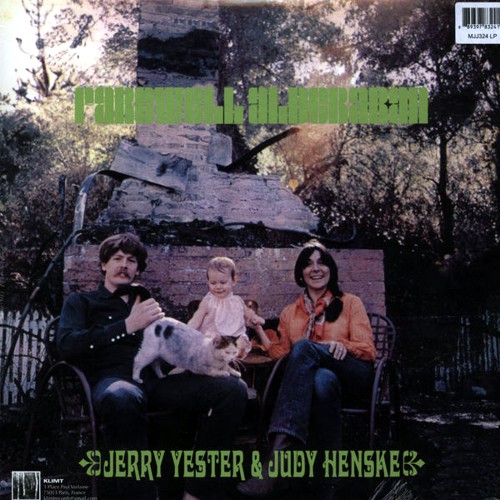
Jerry and Judy would eventually part company as husband and wife in the early 70s, but this record proved that their union, aside from producing the child pictured with them on the front cover, produced a folk-rock classic of such singular artistic merit as to be impossible to follow. “Farewell Aldebaran” is readily available, though in somewhat grey-market conditions as a result of a complicated legal issue that holds other Bizarre/Straight titles in limbo. Perhaps the estate of Herb Cohen will manage to settle whatever outstanding concerns exist so there can be a more proper reissue of this record. It’s not an easy listen, but certainly worth the effort. Here’s a link to a really excellent interview with Jerry Yester about the events leading up to and surrounding the recording of this album – there are some great and surprising twists to the tale.
Yes, just when you think you've seen it all - here comes "Empire Jazz". Well, this is a side of Chewbaca I just never knew! Watch out McCoy Tyner! And just dig R2D2 rockin' those beats! C'mon - you know you would have picked this up if you saw it. The cover alone was worth the $3 I paid for this thing. But what also got my attention was the list of musicians involved on the back cover:
Wow! The cream of jazz royalty paying tribute to Star Wars (or cashing in - who can tell)? One thing I was certain of - there must be some good playing happening on this record. So I bought it, brought it home and................was pleasantly surprised! Side One was a little iffy - "The Asteroid Field" is a bossa-nova of all things. But Side Two has some really tasteful playing going on. I really enjoyed hearing more from trumpeter Jon Faddis. He was a young guy when he joined Charles Mingus in the 70s - just about anybody that spent time playing in Mingus's band is worth hearing and Faddis is no exception. Apparently this has never made an official appearance on CD, but I made sure I made a "needle-drop" since I'm going to find an LP cover frame and give the record to my stepson who loves all things Star Wars. It was so funny I had to get it for him, but I wanted to hear the music first. And the music is not anywhere near as cheesy as the cover might convince you otherwise. Figures that Robert Stigwood would see the value in releasing this kind of project - did it make more money for him than the Sgt. Pepper movie with Peter Frampton and the Bee Gees?
From the blatantly commercial to the blatantly mystical................
Here's a record released ten years prior to "Empire Jazz" - also featuring Billy Cobham on drums. This album has been re-released many times over the years. The copy I have was issued by Rykodisc in the late 1980s on clear vinyl (in its analog incarnation).
Side One is mainly solo acoustic guitar workouts by McLaughlin (starting with a very nice rendition of "Goodbye Pork Pie Hat"). There's some overdubbing going on here, but the end result is tasteful and quite expressive. I have to say this kind of playing sounds pretty singular to my ears. Thoughtful, meditative and expressive. I always enjoyed John McLaughlin - electric or otherwise. Maybe he's a bit more "cerebral" in his aesthetic, but there is a real fire to his approach that is uplifting to hear. Side Two features two ensemble pieces with some great soprano sax work from Dave Liebman. I wonder if this is where Miles Davis heard of him - Liebman would be a steady fixture of Miles' early to mid 70s bands - before the late 70s "retirement" phase.
I've had this record since forever, but the past few nights I've been spinning it quite a few times. The vinyl pressing is really nice - and it's sure fun to look at and handle. Some folks will claim that records pressed on anything but black vinyl are somehow inferior to standard black, but this record proves otherwise (as do some other clear vinyl LPs I have in the collection). It still all comes down to mastering and cutting practices. Colored vinyl can be as pleasing sonically as black vinyl. The only advantage to black vinyl is it does tend to show scratches (when present) moreso than other colors - buying used colored vinyl can be a real crap-shoot for that reason. But if the record is new there should be no wear and as long as you take care of it there should be no problem. And these suckers sure can look cool........
Whether it runs the gamut from the ridiculous to the sublime - jazz is jazz is jazz or is that to say - just improvised-upon music from whatever dimension you like so long as its rooted in the blues - but that could be the American Blues or Eastern European Blues or Brazillian Blues or Japanese Blues..............its all music. Townes Van Zandt broke music down to two categories: "Zippidy Doo Dah" and THE BLUES. So there you go. I don't care what you call it, just don't call me late for dinner. Bright Moments!